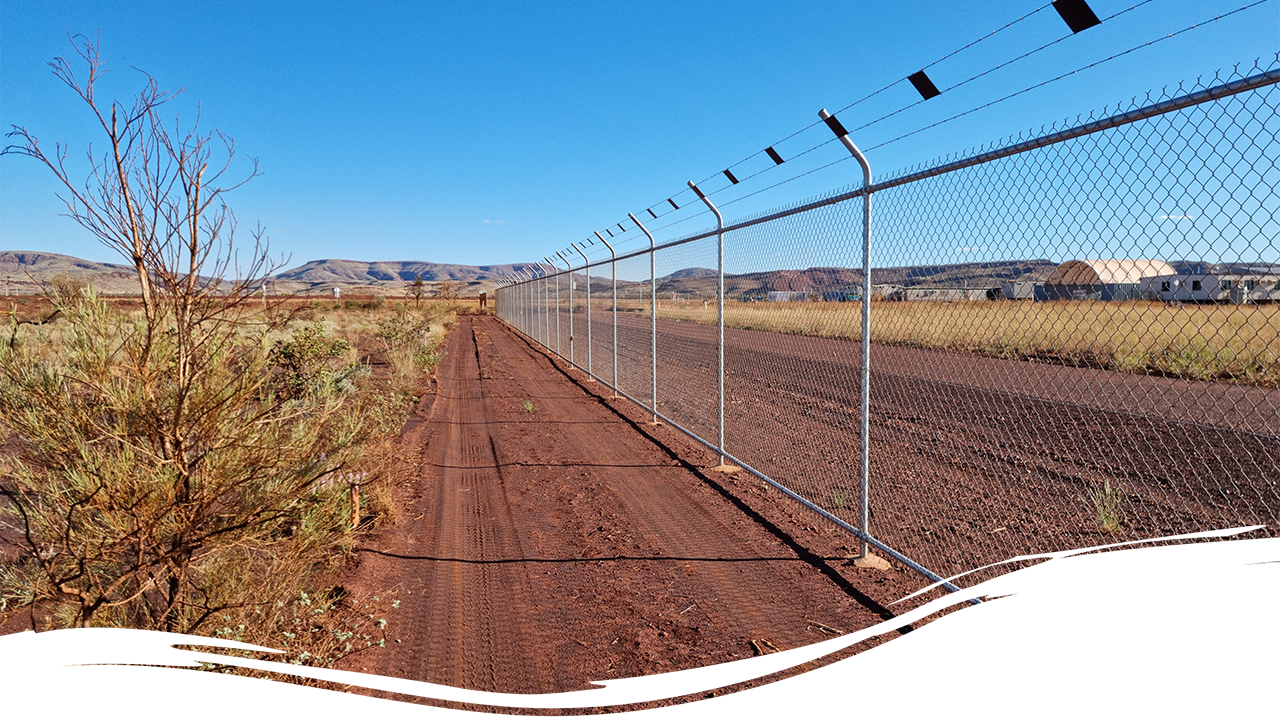
Chainmesh fencing, also known as chain-link fencing, is a woven steel wire fence that forms a diamond-shaped mesh pattern, providing security, durability, and affordability. It is commonly used in industrial sites, sports fields, schools, and residential properties where a strong yet cost-effective barrier is required.
This fencing type offers high visibility, airflow, and flexibility, making it a practical choice for a wide range of applications. It can also be enhanced with barbed wire, privacy screens, or reinforced coatings for added security.
Benefits of Chainmesh Fencing
Cost-Effective Security Solution
One of the main advantages of chainmesh fencing is its affordability compared to other high-security fencing options. It provides a strong perimeter barrier at a lower cost, making it ideal for large-scale fencing projects.
For sites needing extra security, chainmesh fencing can be combined with security fencing to reinforce perimeter protection.
Durable & Weather-Resistant Materials
Chainmesh fencing is typically made from galvanized or PVC-coated steel, which provides rust and corrosion resistance, ensuring long-lasting performance in harsh weather conditions.
For additional durability, fence maintenance and repairs help prolong the life of chainmesh fencing in industrial or outdoor environments.
Versatile & Customizable Design
Chainmesh fencing is available in various heights, mesh sizes, and coatings, making it a flexible choice for different applications. It can be reinforced with barbed wire, razor wire, or privacy screens depending on security needs.
For high-risk locations, anti-climb fencing can be installed alongside chainmesh fencing to prevent unauthorized access.
Common Applications of Chainmesh Fencing
Industrial & Commercial Security
Factories, warehouses, and storage yards use chainmesh fencing to secure perimeters, protect assets, and regulate access.
For additional site security, automatic gates can be installed to control entry and exit points efficiently.
Schools, Sports Fields & Public Areas
Schools, playgrounds, and sports facilities commonly use chainmesh fencing for crowd control and property boundaries while maintaining visibility and airflow.
Construction & Temporary Fencing
Construction sites and temporary work zones use chainmesh fencing for site security, hazard protection, and restricted access. It is lightweight and easy to install, making it a practical option for short-term applications.
For temporary fencing solutions, wind and construction fencing provides additional dust and debris control.
Types of Chainmesh Fencing
Chainmesh fencing is available in different materials and reinforcements, depending on security and durability needs:
- Galvanized Chainmesh Fencing: Standard option with zinc coating for corrosion resistance.
- PVC-Coated Chainmesh Fencing: Features a protective plastic coating, available in various colors for aesthetics and weather resistance.
- Security Chainmesh Fencing: Reinforced with barbed wire or razor wire for high-security areas.
- Temporary Chainmesh Fencing: Portable fencing used for construction and event security.
Choosing the right type depends on budget, security level, and site conditions.
Chainmesh Fencing Installation & Maintenance
Proper installation ensures stability and longevity of chainmesh fencing. The process includes:
- Site preparation and post-installation for structural support.
- Stretching and securing the chainmesh panels to prevent sagging.
- Reinforcing with tension wires or top rails for extra strength.
- Adding security features such as barbed wire or privacy screens.
- Routine inspections and repairs to maintain fence integrity.
FenceWright specializes in custom chainmesh fencing solutions, offering expert installation for industrial, commercial, and residential applications.
For professional chainmesh fencing installation, explore our chainmesh fencing services in Perth.


ISO 9001 is the internationally recognised standard for a
Quality Management System (QMS) that can benefit any size organization.
ISO 14001 is the internationally recognised standard that specifies requirements for an effective environmental management system (EMS).

ISO 45001 is now the internationally recognised standard for OHS management systems.