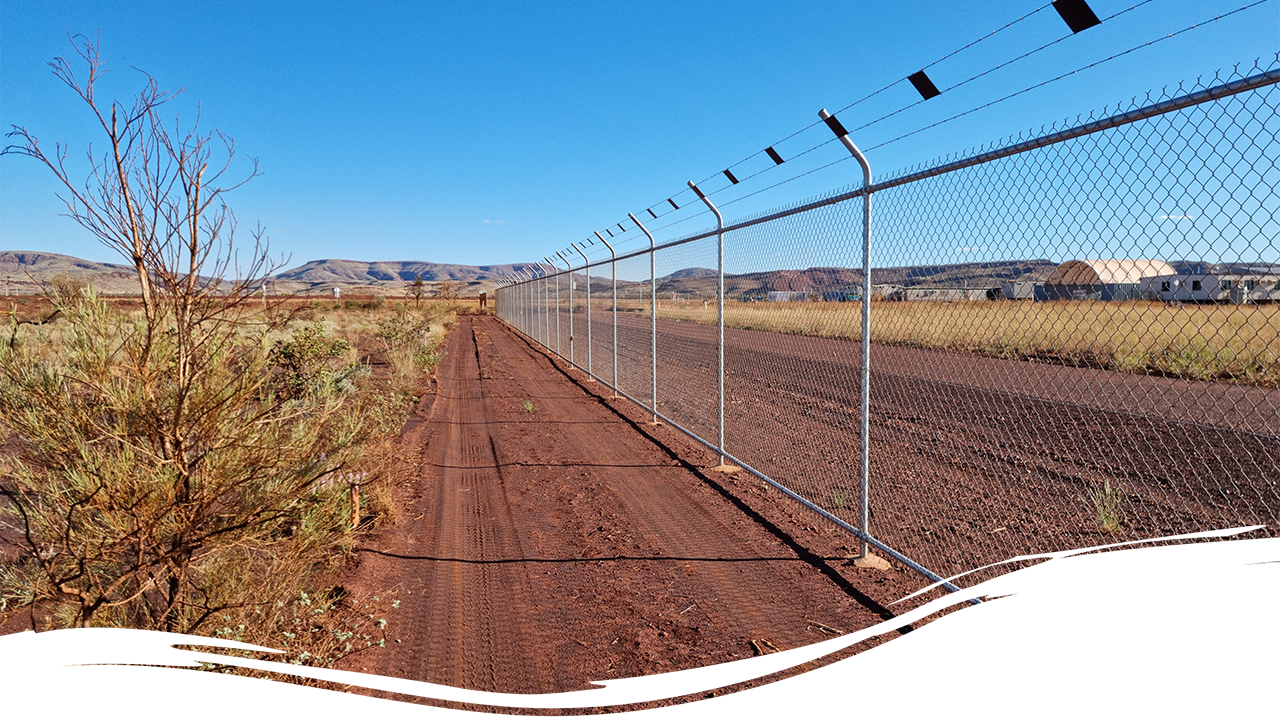
Fence post installation is the process of securing fence posts into the ground to provide structural support and stability for fencing systems. Properly installed fence posts ensure that fences remain upright, durable, and resistant to weather, soil movement, and external pressure.
This installation is crucial for residential, commercial, industrial, and high-security fencing, where foundation strength determines the fence’s longevity and effectiveness.
Benefits of Proper Fence Post Installation
Ensures Fence Stability & Durability
Correctly installed fence posts:
- Prevent leaning, sagging, or collapsing fences.
- Provide strong wind resistance, especially in exposed areas.
- Extend the lifespan of fencing by maintaining structural integrity.
For high-security applications, garrison fencing requires deep-set fence posts to reinforce perimeter protection.
Suitable for Different Ground Conditions
Fence post installation adapts to various soil types and terrains, including:
- Loose or sandy soil, where deeper posts with concrete footings are required.
- Rocky terrain, where rock drilling is needed for secure placement.
- Clay or compacted soil, requiring moisture-resistant post treatments.
For challenging environments, remote fence projects often involve specialized installation techniques.
Customizable for Different Fence Types
Fence post installation methods vary depending on fence material, height, and security level:
- Steel or aluminum posts for industrial and security fencing.
- Timber posts for agricultural and heritage fencing.
- Concrete posts for maximum strength and longevity.
For custom fence configurations, fence fabrication allows for tailored post designs.
Common Applications of Fence Post Installation
Industrial & Commercial Fencing
Factories, warehouses, and secure sites require strong fence posts to:
- Support high-security barriers and perimeter fencing.
- Withstand impact, tampering, and environmental exposure.
- Anchor surveillance systems and deterrent features.
For high-risk locations, security fencing is reinforced with deep-set fence posts.
Rural & Agricultural Fencing
Farmers and landowners rely on fence post installation for:
- Stock fencing to secure livestock and manage grazing areas.
- Boundary fencing to prevent trespassing and property disputes.
- Windbreak fencing to protect crops and soil from erosion.
For livestock containment, stock fencing requires properly anchored posts to handle animal pressure.
Residential & Perimeter Security
Homeowners and gated communities need strong post foundations for:
- Privacy fencing to maintain boundary integrity.
- Decorative fencing that remains upright and aligned.
- Driveway gates that support automated entry systems.
For residential security, automatic gates require reinforced fence posts to support motorized operation.
Types of Fence Post Installation Methods
Fence post installation varies based on ground conditions, fence height, and security needs:
- Concrete Footing Installation: Provides maximum stability for steel and security fencing.
- Driven Post Installation: Uses hydraulic force to drive steel posts deep into the ground, ideal for quick installations.
- Rock Drilling for Fence Posts: Required for rocky terrain where traditional digging is ineffective.
- Augered Post Holes: Creates precise holes for timber and steel post placement, ensuring even spacing and depth.
Choosing the right installation method depends on fence load, soil type, and environmental factors.
Fence Post Installation Process
A structured installation process ensures maximum strength and longevity:
- Site Assessment & Soil Testing – Determining the best post depth and placement.
- Excavation & Hole Preparation – Digging post holes or drilling into rock.
- Post Positioning & Alignment – Ensuring posts are level and evenly spaced.
- Concrete Footing or Secure Anchoring – Setting posts in reinforced concrete or compacted soil.
- Final Adjustments & Structural Reinforcement – Checking for stability before attaching fence panels.
FenceWright specializes in professional fence post installation, ensuring secure and durable fencing for commercial, industrial, and rural projects.
For expert fence post installation, explore our fence post installation services in Perth.


ISO 9001 is the internationally recognised standard for a
Quality Management System (QMS) that can benefit any size organization.

ISO 14001 is the internationally recognised standard that specifies requirements for an effective environmental management system (EMS).

ISO 45001 is now the internationally recognised standard for OHS management systems.