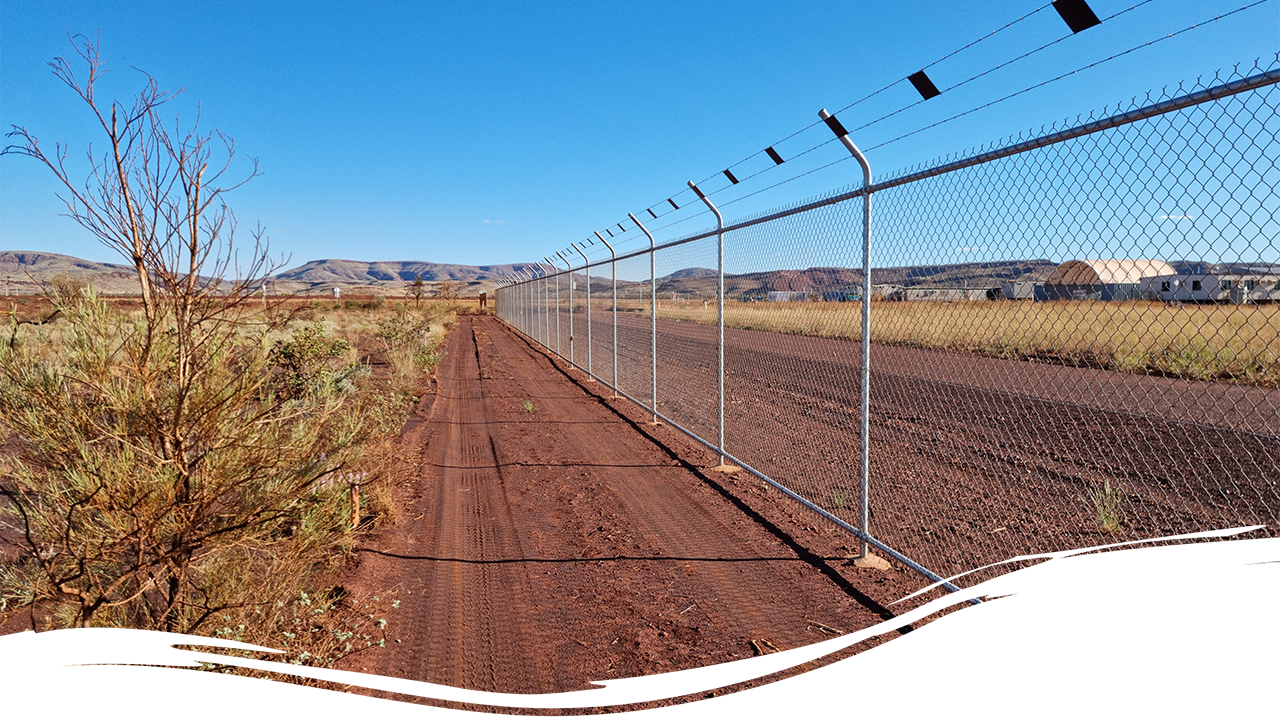
High-security fencing is a specialized fencing solution designed to protect high-risk sites by providing maximum perimeter security and intrusion prevention. These fences are commonly used in industrial facilities, correctional institutions, airports, military bases, and government buildings to deter trespassing and secure sensitive areas.
High-security fencing incorporates anti-climb, tamper-resistant, and impact-resistant features, often combined with surveillance systems and access control for comprehensive protection.
Benefits of High-Security Fencing
Maximum Intrusion Prevention
High-security fencing serves as a strong physical barrier to prevent unauthorized access. Key features include:
- Anti-climb panels and spiked tops.
- Tamper-resistant fasteners and reinforced materials.
- Integration with CCTV cameras, sensors, and alarms.
For additional perimeter protection, security fencing is often installed alongside surveillance systems.
Built for High-Risk Environments
High-security fencing is engineered to withstand harsh conditions and potential attacks. Benefits include:
- Impact resistance against vehicles and forced entry tools.
- Corrosion-resistant coatings for long-term durability.
- Weatherproof designs suitable for outdoor applications.
For coastal and exposed sites, garrison fencing offers enhanced durability and strength.
Supports Access Control & Monitoring
High-security fences often integrate with access control systems, enabling:
- Automated gates for secure vehicle and personnel entry.
- Restricted access to sensitive areas through electronic locks.
- Remote monitoring and intrusion detection.
For advanced entry solutions, automatic gates can be paired with high-security fencing.
Common Applications of High-Security Fencing
Industrial & Commercial Facilities
Factories, warehouses, and data centers require high-security fencing to:
- Protect valuable assets and sensitive information.
- Secure loading docks and restricted storage areas.
- Prevent unauthorized access and vandalism.
For enhanced perimeter strength, weldmesh fencing is a popular option.
Government & Correctional Facilities
High-security fencing is essential for prisons, military bases, and government buildings to:
- Restrict access to critical infrastructure and secure zones.
- Deter escape attempts and unauthorized intrusions.
- Ensure compliance with national safety standards.
For restricted zones, palisade fencing provides maximum impact resistance and anti-climb features.
Airports & Transportation Hubs
Airports and rail stations use high-security fencing to:
- Protect passengers, cargo, and infrastructure.
- Create secure perimeters around runways and terminals.
- Control vehicle and pedestrian access points.
For traffic control in sensitive areas, security bollards can complement high-security fencing.
Types of High-Security Fencing
High-security fencing options are tailored to meet specific security and environmental needs:
- Palisade Fencing: Spiked vertical steel barriers for anti-climb and impact resistance.
- Weldmesh Fencing: High-strength mesh panels that combine visibility with security.
- Chainmesh Fencing with Razor Wire: Economical solution for perimeter control and intrusion prevention.
- Electric Fencing: Provides an active deterrent with controlled shocks for trespassers.
Selecting the right type depends on security requirements, site conditions, and risk levels.
High-Security Fencing Installation & Maintenance
A proper installation process ensures maximum effectiveness and compliance. Key steps include:
- Assessing site risks and security needs.
- Selecting materials and features based on threat levels.
- Installing deep-set fence posts for added stability.
- Integrating access control systems and surveillance equipment.
- Conducting routine inspections to identify potential vulnerabilities.
FenceWright specializes in high-security fencing solutions, offering custom designs and professional installation for sensitive locations.
For expert high-security fencing installation, explore our high-security fencing services in Perth.

ISO 9001 is the internationally recognised standard for a
Quality Management System (QMS) that can benefit any size organization.
ISO 14001 is the internationally recognised standard that specifies requirements for an effective environmental management system (EMS).

ISO 45001 is now the internationally recognised standard for OHS management systems.