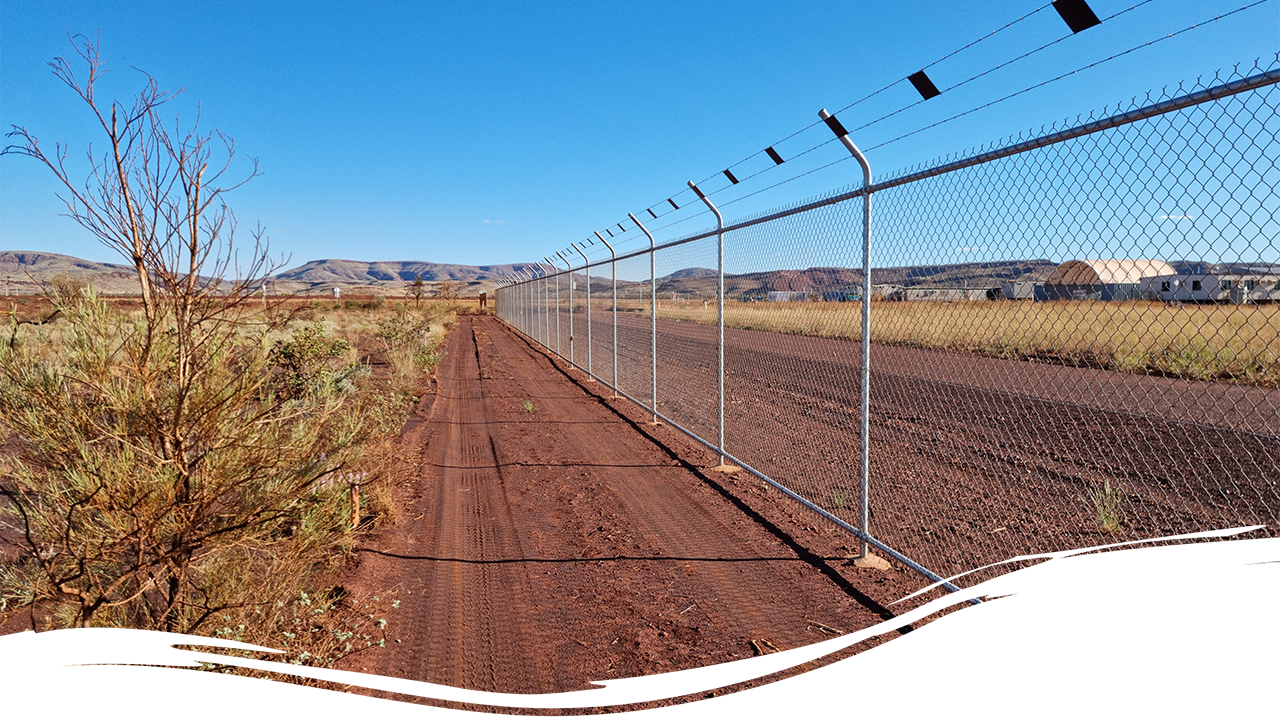
Palisade fencing is a high-security steel fencing system designed to protect industrial, commercial, and government properties from unauthorized access and security threats. It consists of vertical steel pales with pointed or curved tops, making it extremely difficult to climb, cut, or breach.
This fencing type is commonly used in military bases, correctional facilities, transportation hubs, and high-risk areas, where maximum perimeter protection is required.
Benefits of Palisade Fencing
Maximum Security & Intruder Deterrence
Palisade fencing is specifically designed to prevent climbing, cutting, or forced entry. The vertical steel pales can be manufactured with spiked, curved, or triple-pointed tops, making them a powerful deterrent against intruders.
For extra security, palisade fencing can be installed alongside high-security fencing to create a reinforced perimeter defense.
Strong & Durable Steel Construction
Made from galvanized or powder-coated steel, palisade fencing is highly resistant to rust, corrosion, and environmental damage, making it ideal for coastal areas and extreme weather conditions.
For long-term durability, fence maintenance and repairs help ensure palisade fencing remains structurally sound.
Customizable for Different Security Levels
Palisade fencing can be designed to meet specific security needs, with customization options such as:
- Varying fence heights for different security levels.
- Curved or straight pale designs for enhanced deterrence.
- Additional barbed wire or razor wire reinforcements for high-risk locations.
For industrial and government sites, garrison fencing can be combined with palisade fencing for extra strength and security.
Common Applications of Palisade Fencing
Industrial & Commercial Security
Factories, warehouses, and logistics centers use palisade fencing to protect assets and secure perimeters. This fencing is often paired with CCTV surveillance and automated access gates for controlled site entry.
For secure gate access, automatic gates can be integrated with palisade fencing.
Government & Military Facilities
Correctional facilities, defense sites, and government buildings require reinforced security fencing to prevent unauthorized access. Palisade fencing, often equipped with anti-climb extensions and motion detection, ensures maximum protection.
Utility & Transportation Infrastructure
Airports, railway stations, and power plants rely on palisade fencing to safeguard critical infrastructure and prevent security breaches.
For restricted access areas, access control systems can be installed alongside fencing for regulated entry.
Types of Palisade Fencing
Palisade fencing comes in various configurations, depending on security and environmental requirements:
- D Section Palisade Fencing: Features a smooth, rounded profile with a strong structure, ideal for low to medium security applications.
- W Section Palisade Fencing: Has a reinforced, ridged profile, providing increased strength and tamper resistance.
- Spiked Palisade Fencing: Includes pointed pale tops for maximum anti-climb protection.
- Curved Palisade Fencing: Designed with a curved top to further deter scaling attempts.
Choosing the right type depends on site security needs, fencing height, and environmental factors.
Palisade Fencing Installation & Maintenance
Proper installation ensures optimal security and structural integrity. The process includes:
- Assessing site conditions and security risks.
- Selecting the appropriate steel pales and reinforcement options.
- Securing steel posts into concrete foundations for stability.
- Installing tamper-resistant fasteners and locking mechanisms.
- Routine inspections to check for wear, rust, or attempted tampering.
FenceWright specializes in custom palisade fencing solutions, offering professional installation and high-strength security fencing for commercial, industrial, and government applications.
For expert palisade fencing installation, explore our palisade fencing services in Perth.

ISO 9001 is the internationally recognised standard for a
Quality Management System (QMS) that can benefit any size organization.
ISO 14001 is the internationally recognised standard that specifies requirements for an effective environmental management system (EMS).

ISO 45001 is now the internationally recognised standard for OHS management systems.