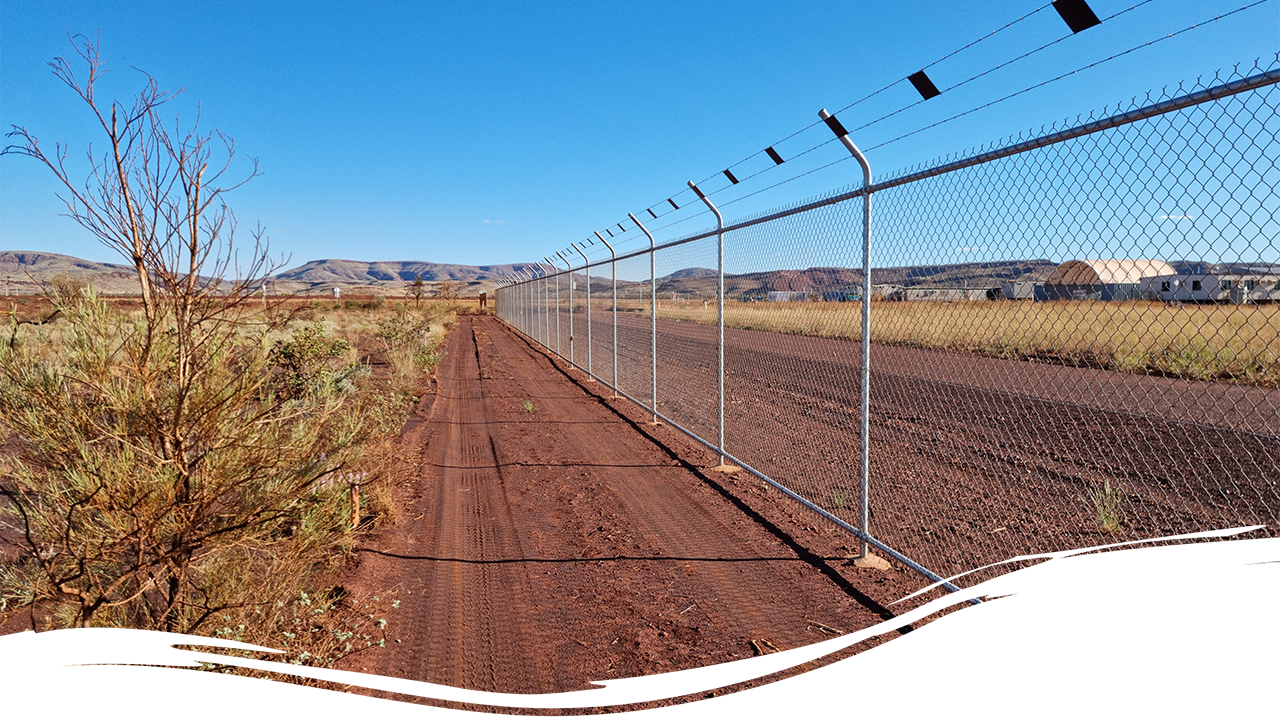
Rock drilling is a specialized process used to create holes in hard surfaces like rock, compacted soil, and concrete for secure fence post installation. This method ensures stable and long-lasting fencing foundations, especially in challenging terrains where traditional digging is not effective.
Rock drilling is commonly required for industrial fencing, rural enclosures, and high-security barriers, where strong anchoring is essential to prevent structural failure.
Benefits of Rock Drilling for Fence Installation
Ensures Stability & Structural Integrity
Proper rock drilling provides a solid foundation for fence posts by:
- Creating deep, secure holes in rocky or hard-packed soil.
- Preventing fence movement, leaning, or collapse over time.
- Ensuring long-term durability against environmental forces.
For high-security applications, garrison fencing requires deep-set posts to maintain perimeter protection.
Ideal for Difficult & Rocky Terrain
In areas with hard ground conditions, traditional digging is ineffective. Rock drilling allows:
- Fencing installation on rocky hills, construction sites, and remote locations.
- Consistent hole depth and width for proper post placement.
- Adaptability to different fence types and materials.
For fencing projects in rugged landscapes, remote fence projects often require specialized rock drilling.
Customizable for Different Fence Types
Rock drilling supports various fencing solutions, including:
- Steel and aluminum posts for industrial sites.
- Timber posts for rural and agricultural properties.
- Concrete-anchored posts for high-wind areas.
For custom fence installations, fence fabrication ensures tailored fence post designs to match drilled foundations.
Common Applications of Rock Drilling
Industrial & Commercial Fencing
Factories, warehouses, and secure facilities require deep-set fence posts for:
- Strong perimeter protection against intrusions.
- Wind-resistant barriers in exposed areas.
- Long-term structural stability.
For high-impact security, palisade fencing often requires rock drilling for reinforced fence post installation.
Rural & Agricultural Fencing
Farmers and landowners use rock drilling for:
- Fence posts in rocky soil or hilly landscapes.
- Stock fencing and livestock enclosures.
- Preventing fence movement in extreme weather.
For livestock containment, stock fencing installed with rock-drilled posts ensures secure enclosures.
High-Security & Government Projects
Correctional facilities, military bases, and government buildings require reinforced fence foundations for:
- Preventing forced entry or fence tampering.
- Withstanding high-impact conditions.
- Supporting surveillance and access control systems.
For government infrastructure, security fencing often involves rock drilling for deep-set security barriers.
Types of Rock Drilling Techniques
Different rock drilling methods are used depending on terrain conditions and fence requirements:
- Percussion Drilling: Uses repeated hammering action to break through hard rock.
- Rotary Drilling: Utilizes a rotating drill bit to create smooth, deep holes.
- Core Drilling: Extracts cylindrical rock samples, ideal for testing ground conditions.
- Down-the-Hole (DTH) Drilling: Effective for deep and wide fence post installations.
Selecting the right method depends on rock hardness, fence height, and load-bearing needs.
Rock Drilling Process for Fence Installation
A professional rock drilling service ensures precision and long-term stability. The process includes:
- Site Inspection & Terrain Analysis – Assessing soil and rock hardness.
- Selecting the Right Drilling Method – Choosing between rotary, percussion, or core drilling.
- Drilling Holes to Required Depth & Diameter – Ensuring proper fence post anchoring.
- Installing Fence Posts & Securing with Concrete – Reinforcing posts for maximum strength.
- Final Inspection & Alignment Checks – Ensuring fence stability and compliance.
FenceWright specializes in rock drilling services, ensuring secure fence foundations for industrial, commercial, and rural projects.
For expert rock drilling solutions, explore our rock drilling services in Perth.

ISO 9001 is the internationally recognised standard for a
Quality Management System (QMS) that can benefit any size organization.
ISO 14001 is the internationally recognised standard that specifies requirements for an effective environmental management system (EMS).

ISO 45001 is now the internationally recognised standard for OHS management systems.